Terrain · an AI search strategy tool from AI Search Leaders
Map the territory
AI search reads.
Terrain is an AI search strategy tool. It shows you the pages, Reddit threads and articles the engines read before they answer, which of them name you, and what to do about the ones that don’t.
Members of AI Search Leaders get early access. Built for agencies and in-house search teams.
Sources fromGoogle search, the engines’ own searches, Reddit, the news, YouTube, TikTok, Instagram and LinkedIn.
Answers fromChatGPT, Google AI Overviews, Google AI Mode and Gemini, in the markets you sell in.
What Terrain is
Strategy starts with what the engines read.
An AI answer is assembled from what the engine reads: roundups, reviews, forum threads, the press. Terrain reads that territory for your category, shows you what’s behind the answers, and puts the work in order: which pages to win, which threads to join, which publishers to pitch first.
01
Asks what buyers ask
Drafts the prompts from the real Google searches your buyers make, and asks each engine in the markets you sell in.
02
Maps what the engines read
The category's whole territory, cited or not: every page, thread and article on it, read in full.
03
Reads what's said
Codes what each source says about each brand, quoting it word for word.
04
Ends in a report
Opens on the answer and what to do, with the evidence one click away and a deck to present.
01 · The source map
Know which pages decide the answer.
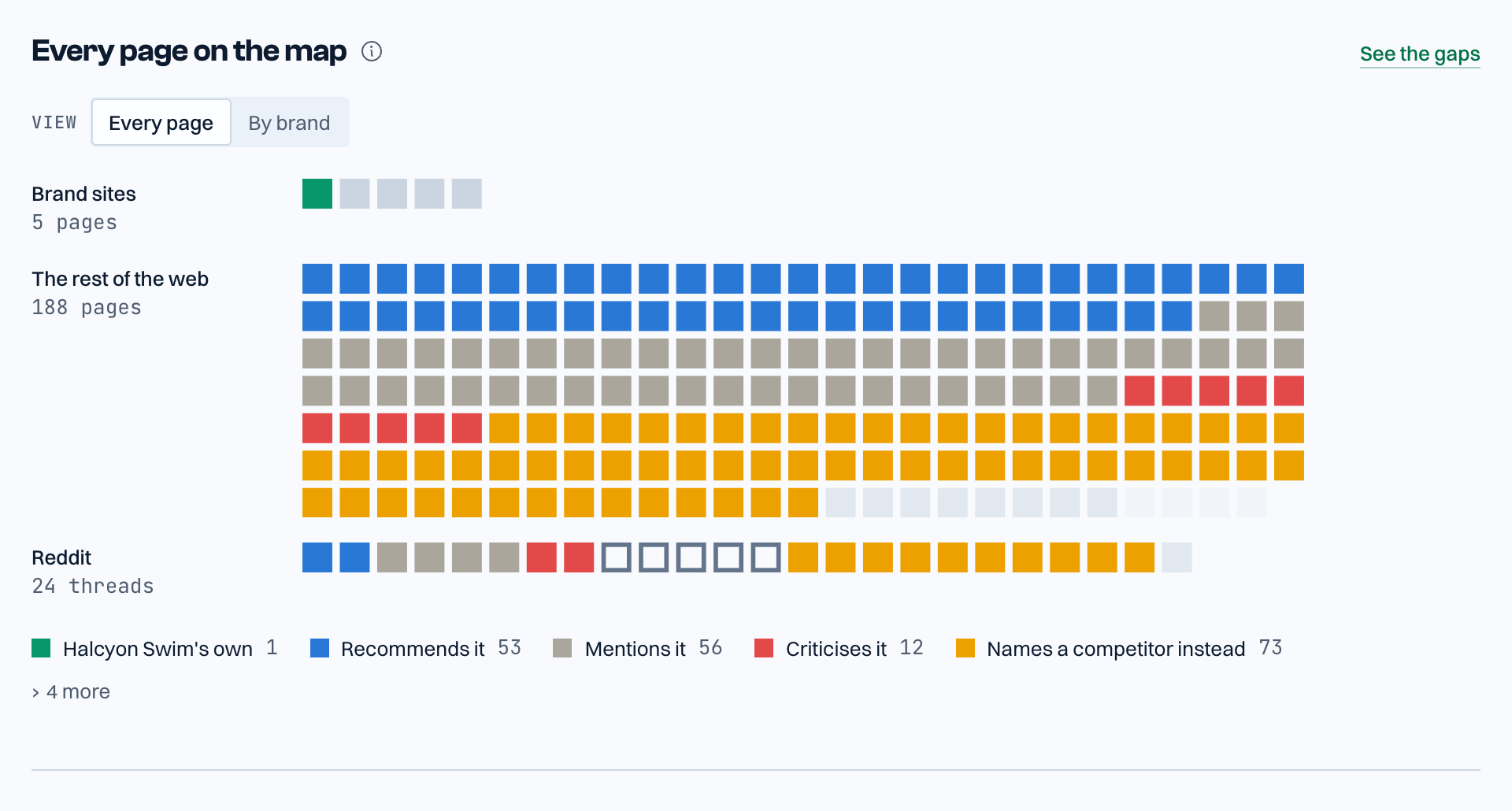
Terrain builds your category's territory on its own terms: Google's top results for the searches buyers make, the searches the engines run themselves, your competitors' strongest pages, Reddit and the press. It reads every page and weights each by search rank and by how often AI answers use it.
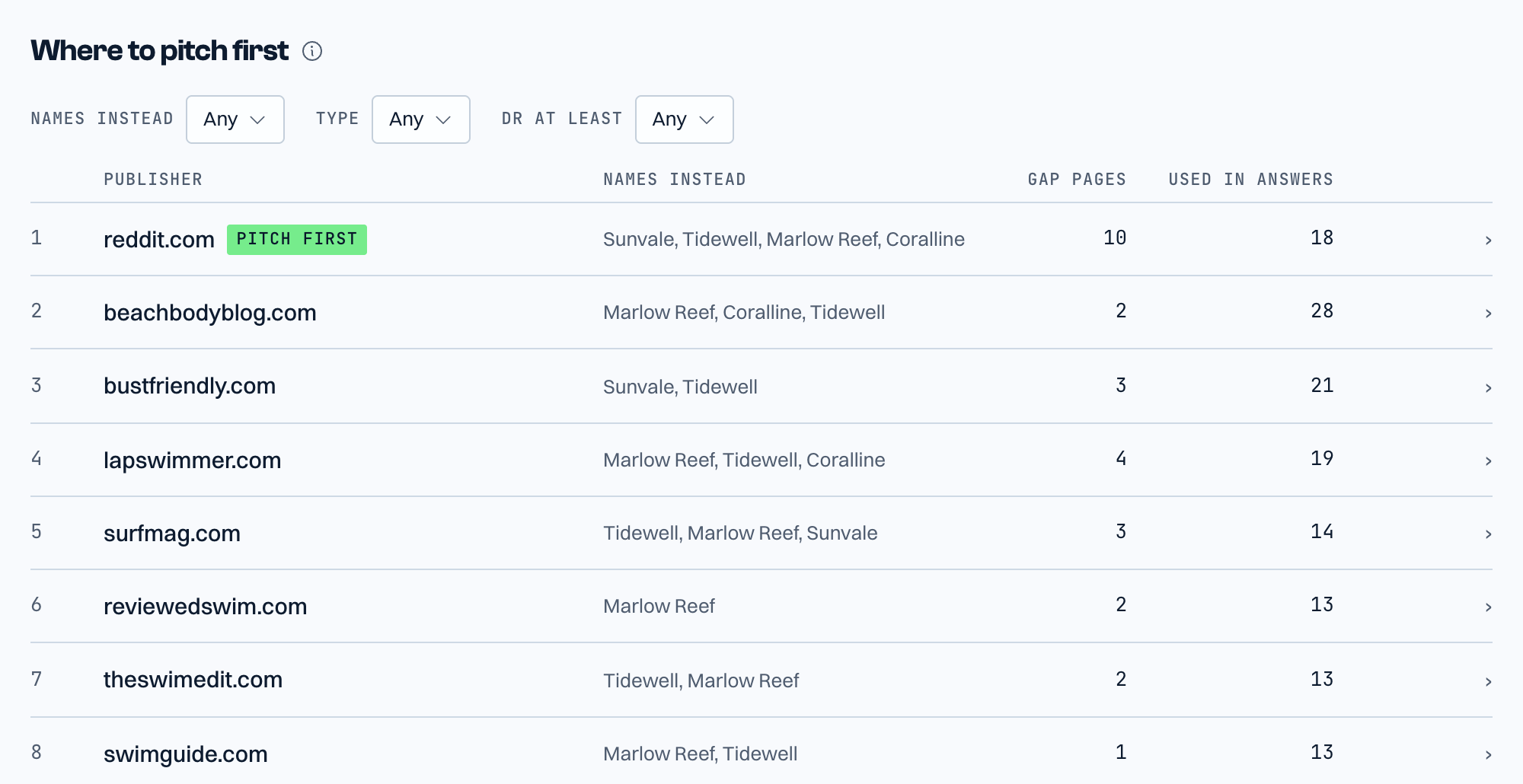
- Gaps: the heaviest pages that name a rival and not you. That's the outreach list.
- The sites the answers lean on most, and whether each one names you, a rival or neither.
- Page type, page quality and Domain Rating by Ahrefs to put the work in order.
02 · How the territory talks
Not just whether you're named. What's said.
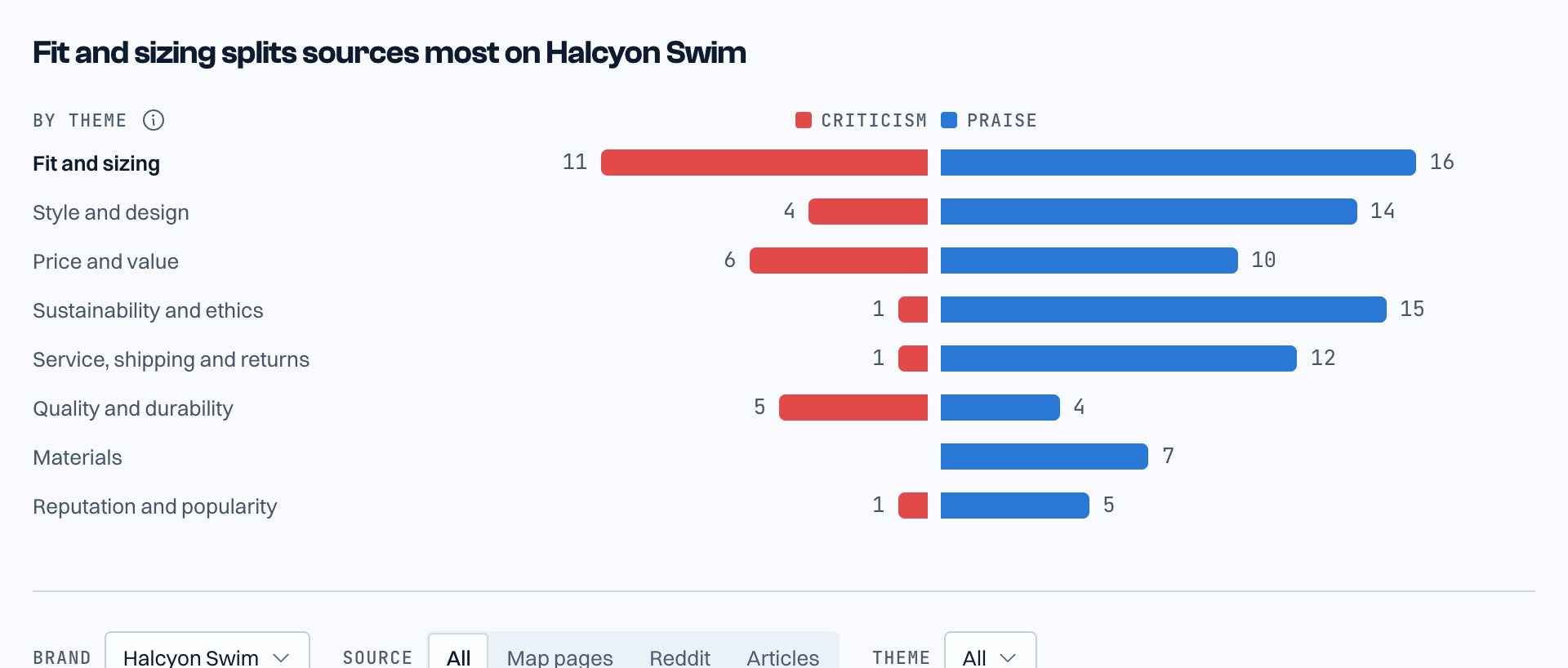
Every map page, Reddit thread, news article and AI answer that names a brand is coded: recommended, listed, or criticised, and on which theme. Each coded mention carries a quote, and code checks the quote is word for word in the source before it counts.
- Your brand against each rival, source by source: the answers may praise you while the threads behind them don't.
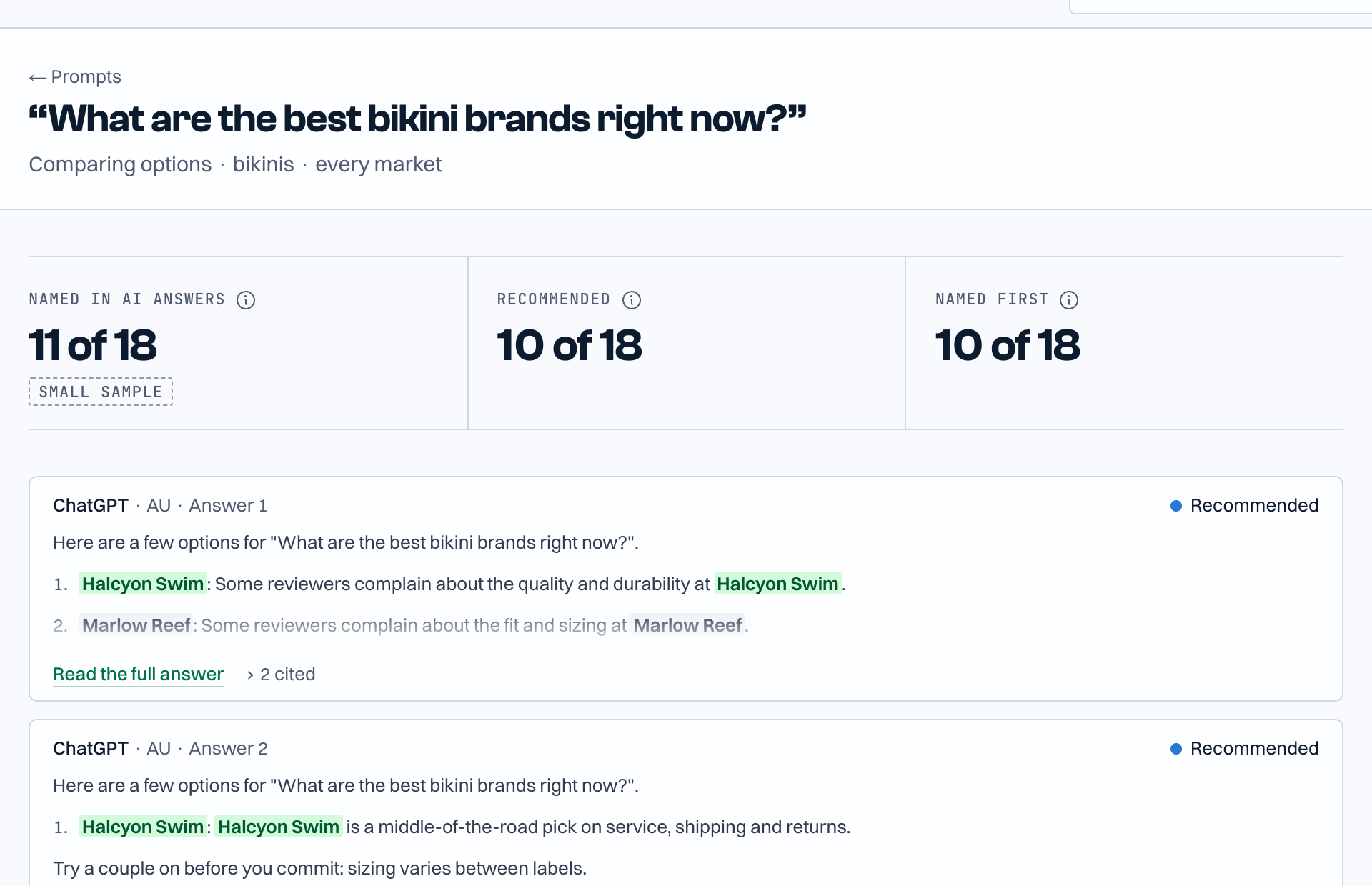
- Every answer in full, with the brands it names in order and the pages it cited.
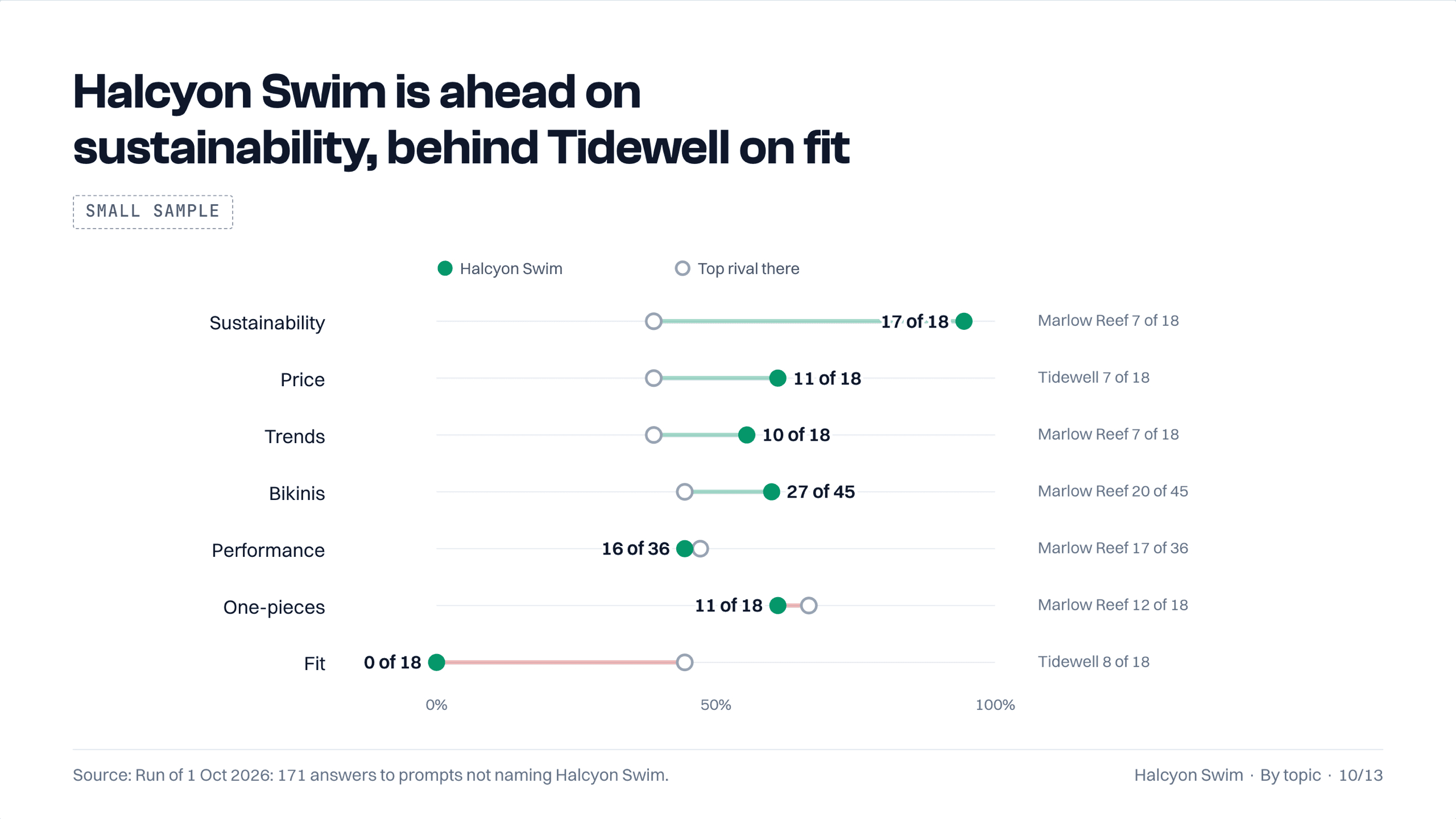
- Themes set for your category, so fit and sizing, fees or onboarding are measured in your clients' terms.
03 · Reddit and the conversation
Every thread, read. Not just the cited ones.
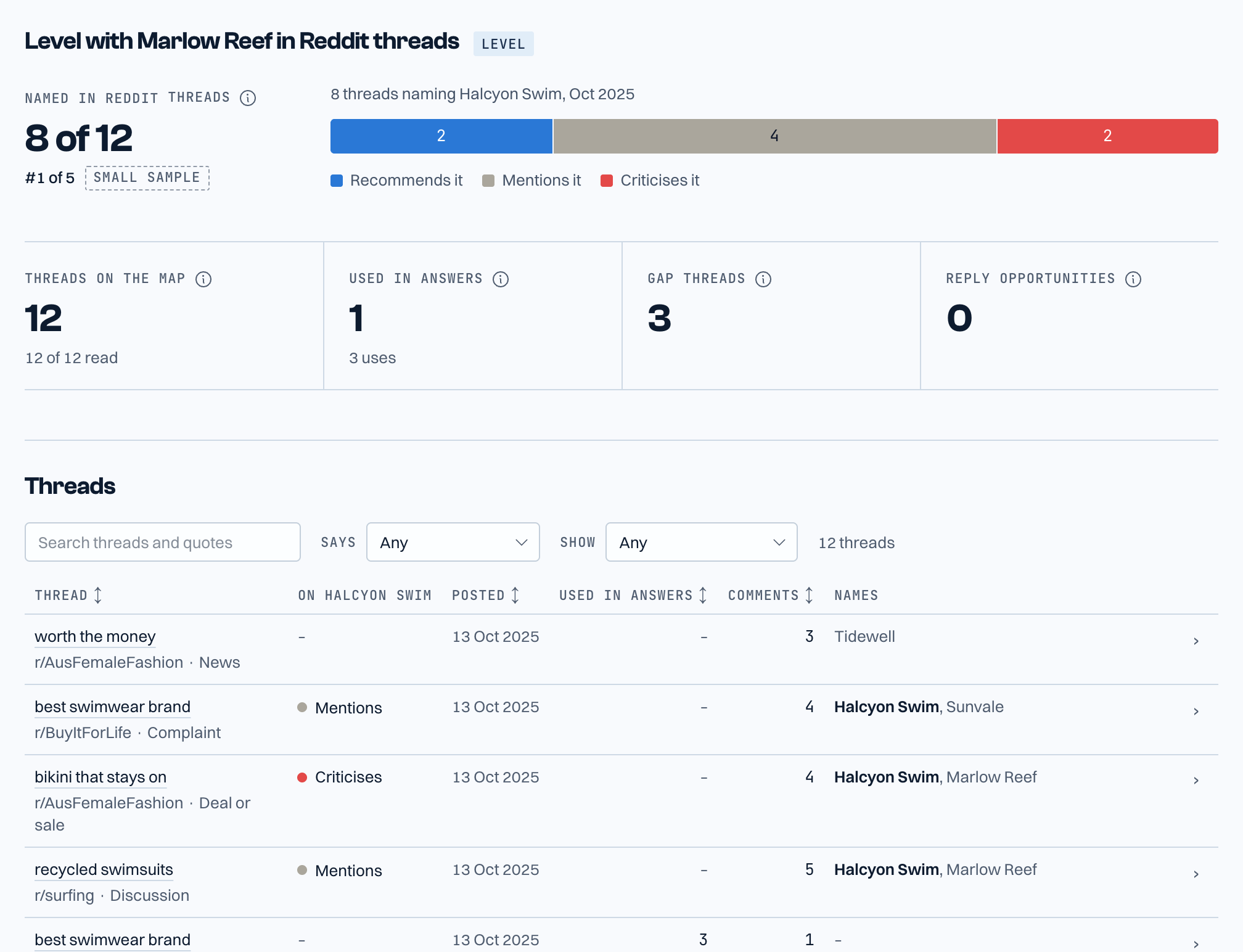
Engines lean on Reddit, and not only on the threads they cite. Terrain reads every thread on your map, the post and its comments, and records which brands each one names and where.
- The threads behind the answers about you, most used first, with the comment that names you.
- Subreddits that name rivals and never you, and recent threads asking for a recommendation where a reply would count.
- Media coverage and social posts (YouTube, TikTok, Instagram, LinkedIn) mapped the same way, social posts weighted by the attention they get.
04 · Measurement you can defend
Numbers you can put in front of a client.
AI answers vary from one asking to the next, so a single reading can mislead. Terrain asks each prompt more than once and says how sure every number is.
- Frozen, versioned prompt sets: every number traces back to the exact wording asked.
- A 95% interval on every share. A lead inside the noise is marked Level, and small samples show counts, not percentages.
- Raw answers and pages kept verbatim; every judgment is a versioned derivation that can be rerun without paying twice.
05 · Findings, not dashboards
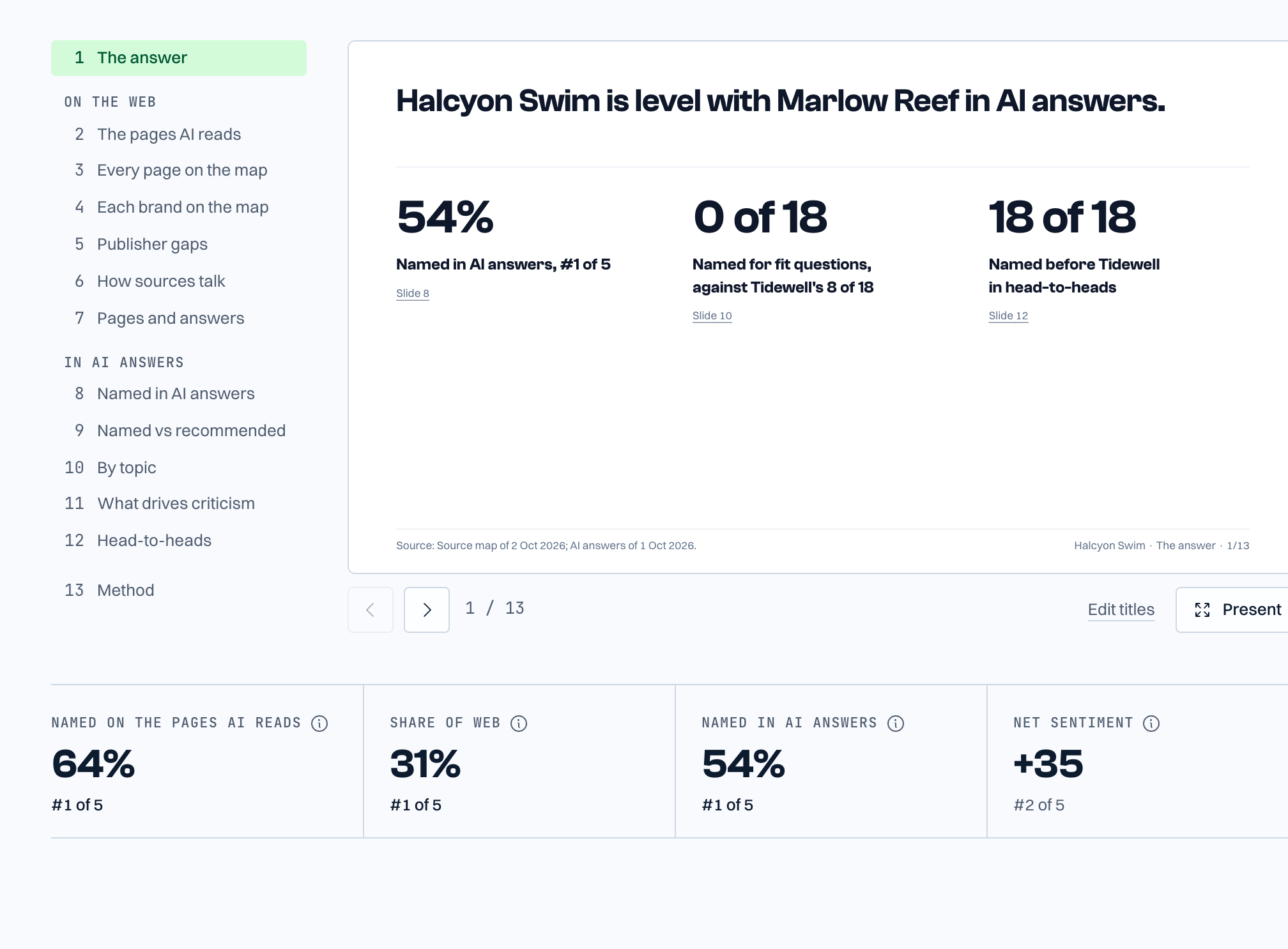
The answer first. Then the evidence.
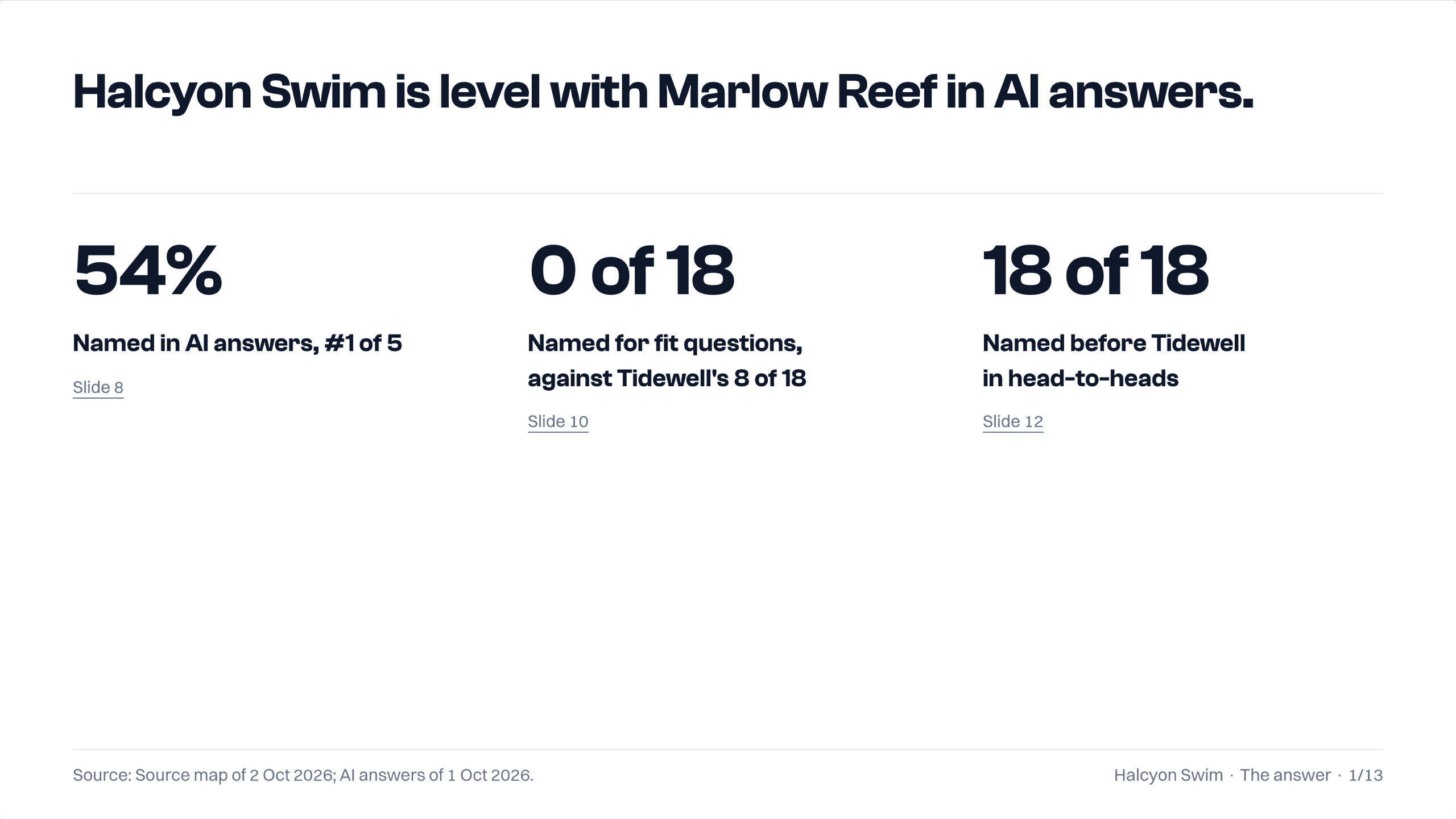
Each brand opens with the answer: where it stands in one sentence, and the three numbers behind it. Gaps puts the outreach in order, the strong sites the answers already lean on first. Present turns the findings into an executive deck: the answer on the first slide, and every slide after it a titled number that supports it.
- Where to pitch first: the publishers naming rivals and not you, the ones the answers use most at the top.
- Slide titles that state the number, and only claim a lead when it's beyond the noise.
- One click to a PDF, one slide per page.
Built for agencies
The analysis your client pays you for, already drafted.
Many brands, one workspace
Hold every client brand in one organization, invite your team, and switch between them in a click.
Onboarding from a domain
Give Terrain a site. It drafts the profile, competitors and prompts from real searches for you to review and freeze.
Run it again when it counts
After the outreach, a launch or a relaunch, refresh the brand by hand. Every run is estimated and capped before it starts.
A client view
Every results page without the setup, ready to screen-share or hand over.
Exports
Every table as one Excel workbook or a CSV each, numbers left blank rather than guessed when they're out of date.
Claude, connected
Read any brand from Claude through Terrain's MCP connector: ask questions of the data, draft the client note.
Who’s behind it
Terrain is built by AI Search Leaders, the executive community for the future of search, run by Tom Critchlow and Jeremy Cabral.
It’s the tool we wanted for our own client work: one that shows its working, says when a change is only noise, and ends in a recommendation rather than a chart.
Screens show Halcyon Swim, a fictional brand, with sample data.

Early access
Terrain comes with membership.
Members get early access to Terrain and the tools that follow it. Sign in with the email of your membership.